
SCIENTIFIC RESEARCH
Research Areas
Explore the deep integration of communications and intelligence for 6G and future information technologies
Browse Research Areas
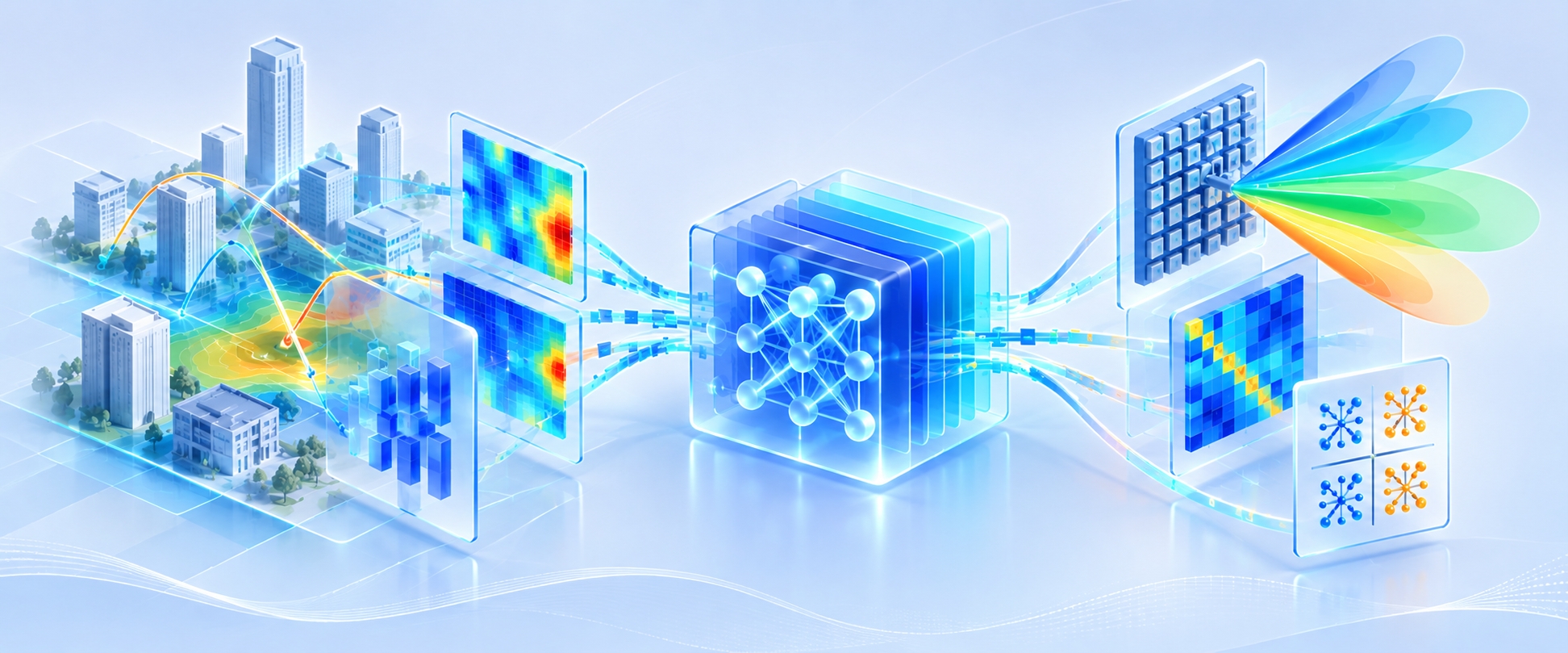
AI-Native Air Interface
To support the evolution toward intelligent 6G wireless networks, we explore new technology frameworks that deeply integrate artificial intelligence with the wireless air interface. Our research covers AI-native technologies for wireless channels, physical-layer transmission, and higher-layer wireless functions, advancing wireless systems beyond conventional modular design toward greater intelligence, adaptability, and joint optimization.
Focusing on generalization, reliability, and real-time performance in complex, dynamic environments, we investigate intelligent algorithms, system architectures, and efficient implementations. This establishes a complete technology chain from algorithm design and system validation to software and computational operator optimization, supporting the development and industrial deployment of intelligent 6G air interfaces.
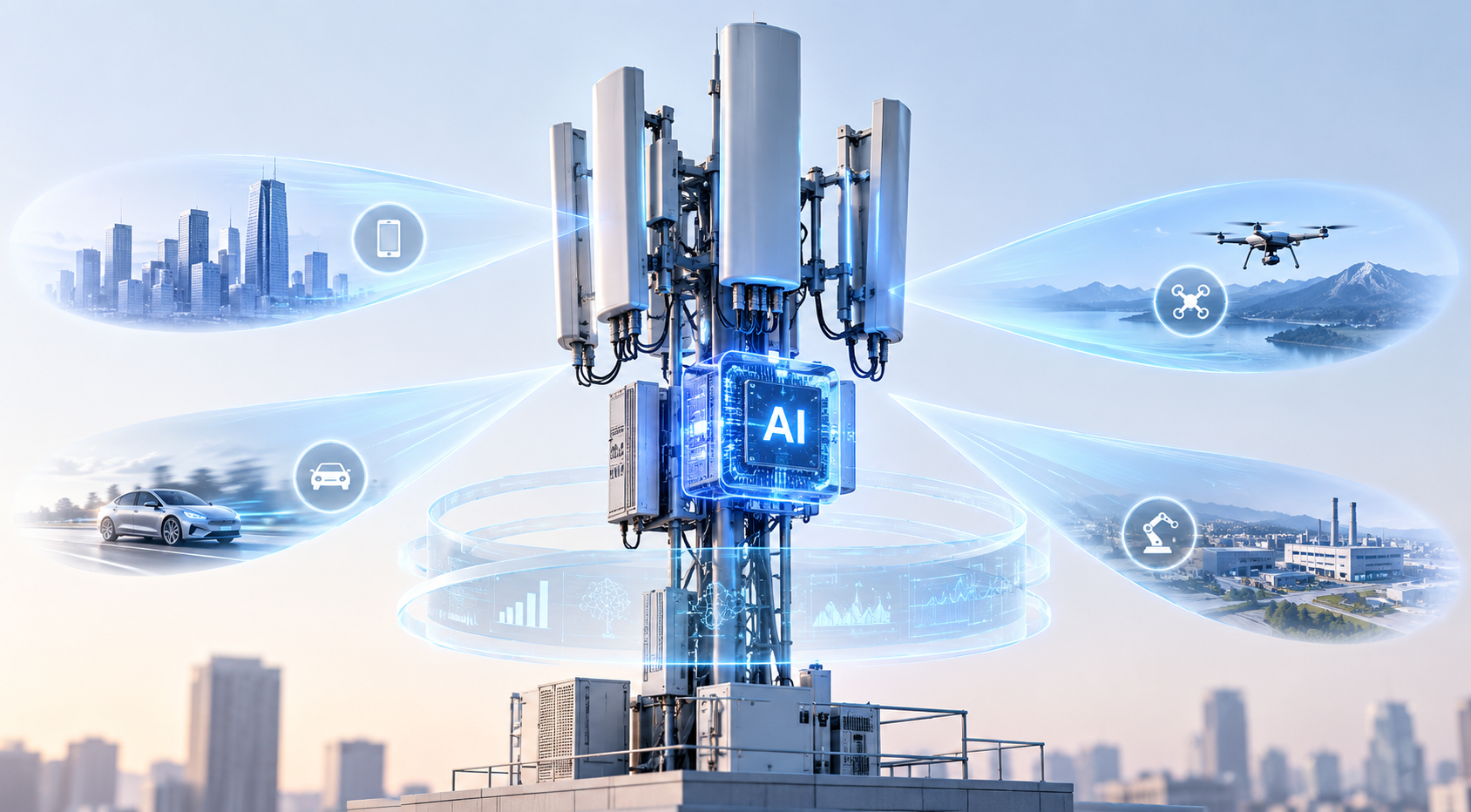
AI EDGE Systems and New Terminals
Rapid advances in AI are transforming wireless networks from infrastructure dedicated to connectivity into integrated infrastructure for communications and intelligence, placing new demands on the versatility, flexibility, and real-time performance of edge computing resources. We explore AI EDGE architectures and key technologies based on general-purpose heterogeneous computing. Through hardware–software decoupling and unified resource scheduling, we enable computing-resource sharing and joint optimization between RAN and AI workloads.
Our aim is to build open, scalable, and continuously evolving AI EDGE computing infrastructure that provides a unified computing foundation for intelligent 6G networks and the ubiquitous deployment of AI applications.
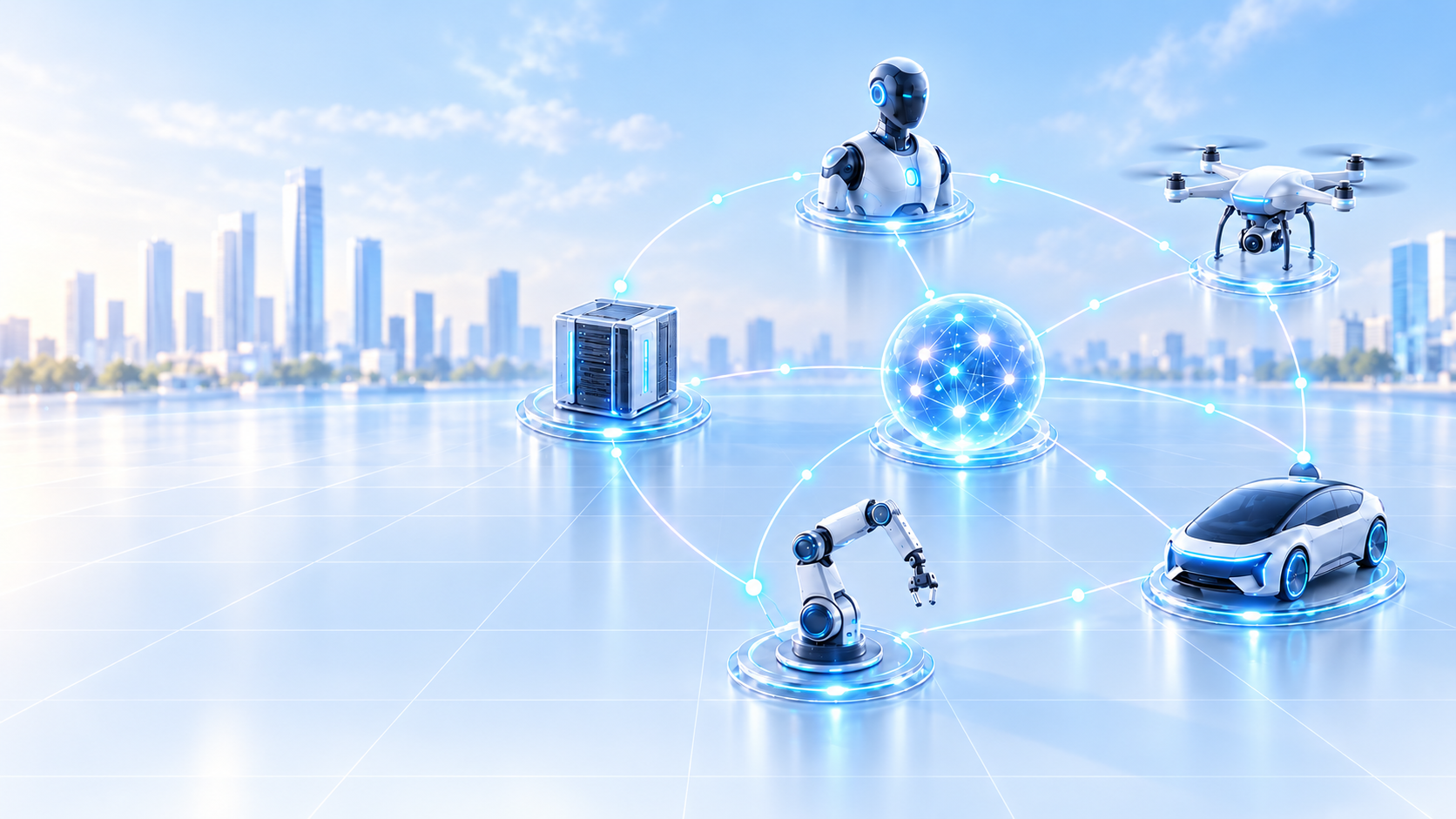
Agent Communication Networks
The rapid growth of AI applications is creating demand for ubiquitous access and collaboration among vast numbers of agents, bringing new opportunities and challenges for 6G networks. We explore native 6G network capabilities and open mechanisms for agents, investigating new architectures and mechanisms that coordinate connectivity, computing, and intelligence. This supports the transition from connecting devices to enabling interaction and collaboration among agents.
Through research on key technologies and prototype validation, we explore how 6G networks can serve as the neural hub interconnecting agents, providing a network foundation for Physical AI.
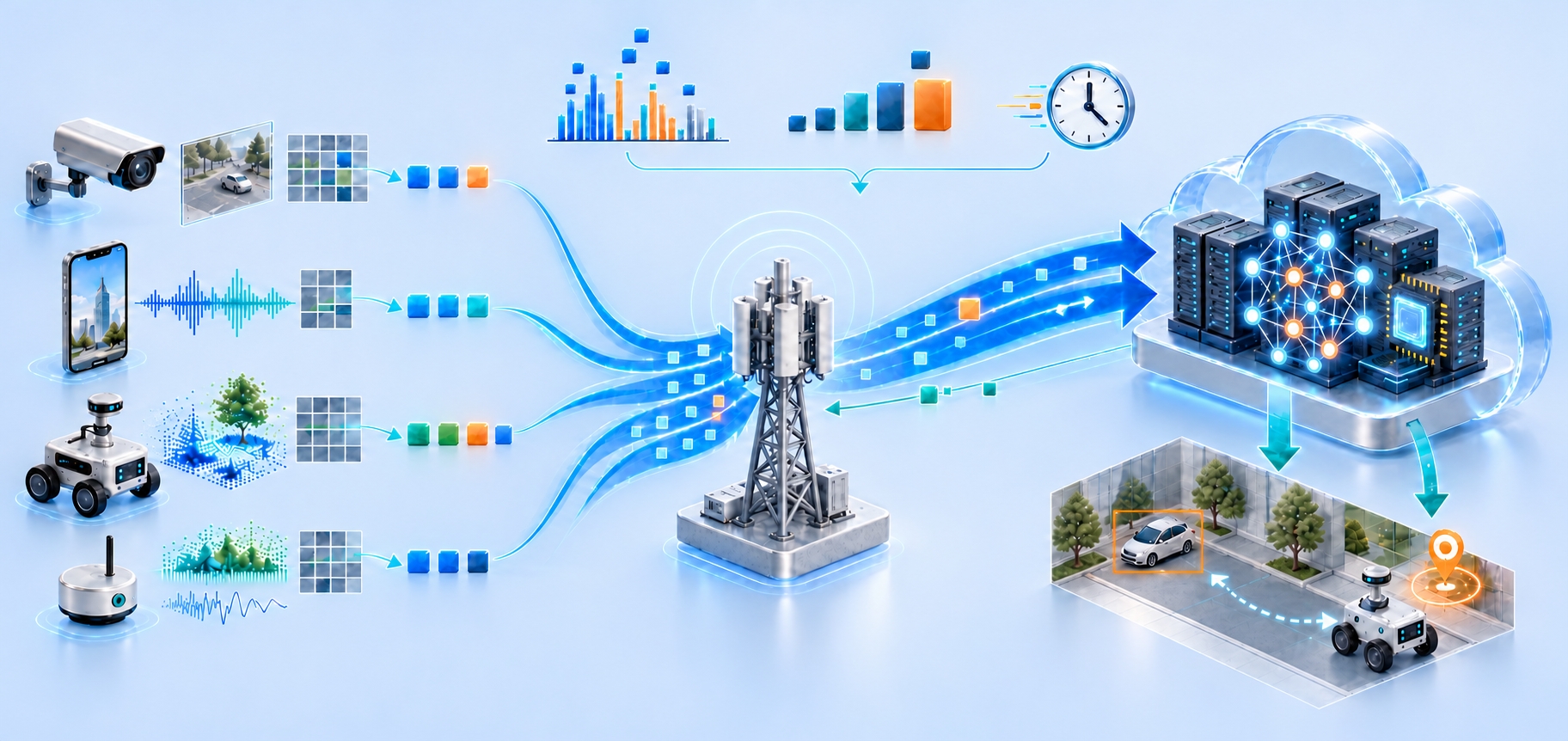
Task-Driven Paradigm for Intelligent Communications
Changes in AI services, the expansion of communication entities from people and conventional terminals to agents and collaborative agent groups, and sustained explosive growth in multimodal data create new requirements and challenges. We seek to move beyond conventional communication-network design centered on reliable bit transmission to study task-oriented information acquisition, semantic representation, value assessment, and efficient transmission. We investigate how information of different modalities contributes to the formation and realization of task value during perception, cognition, decision-making, and execution, and examine the relationships among information value, communication-resource consumption, and task outcomes. We develop methods for jointly optimizing information processing, transmission, and resource allocation according to task requirements.
By using computation to reduce bandwidth requirements and semantic processing to avoid redundant transmission, we advance from optimizing communication resources for bit delivery toward task-value-oriented joint optimization of communication, sensing, computing, and intelligence. This drives a new communication paradigm that moves beyond transporting bits to conveying semantics, understanding intent, guiding actions, and completing tasks.
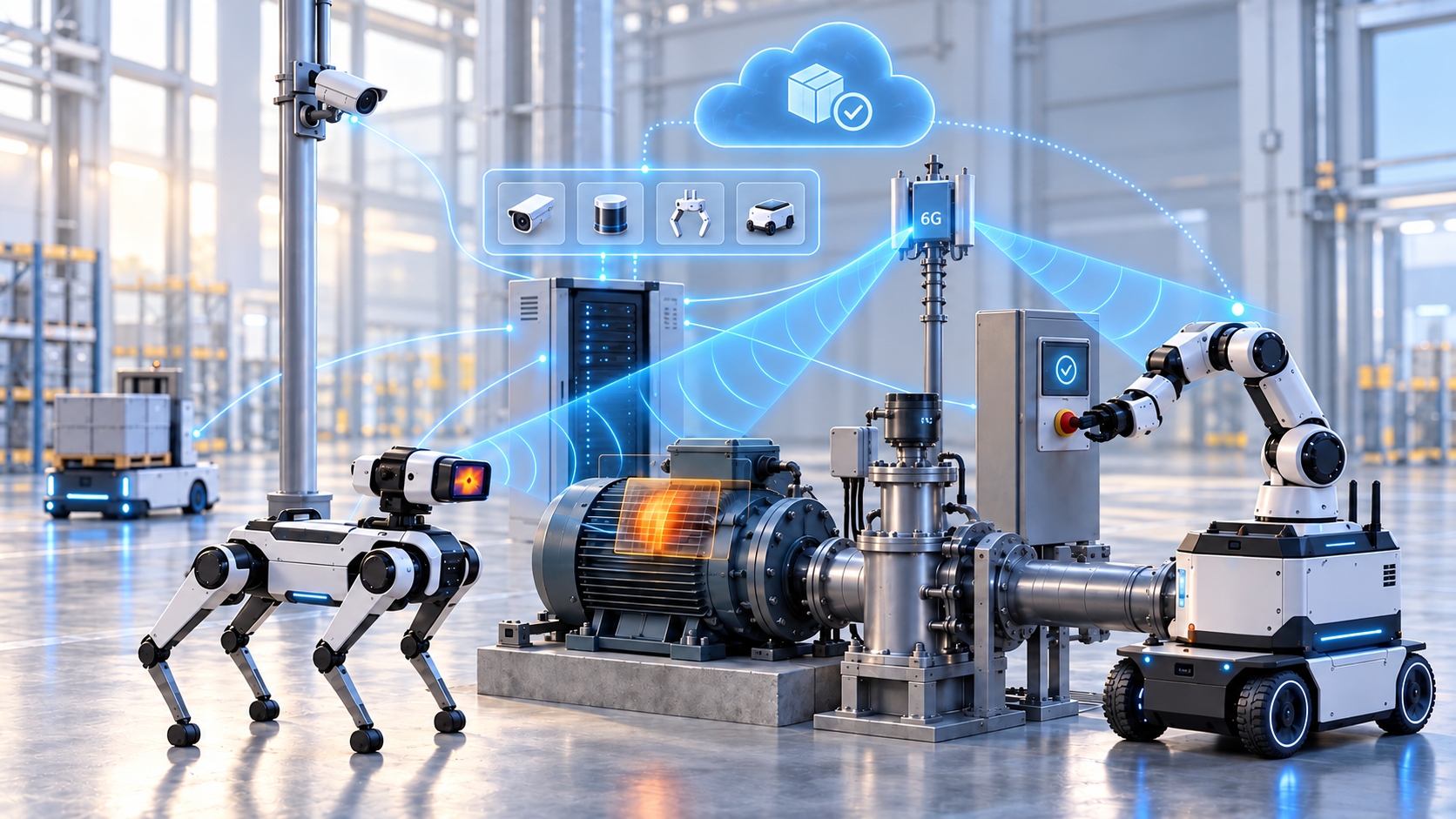
Application Scenarios for Integrated Communications, Sensing, AI, and Computing
Rapid advances in Physical AI are extending artificial intelligence from digital spaces into the physical world, placing new demands on intelligent sensing, autonomous decision-making, and multi-agent collaboration in complex, dynamic environments. We explore new modes of device–edge–cloud collaboration among heterogeneous embodied agents. Our research addresses the integration and trustworthiness verification of robot capabilities, distributed component reuse under capability constraints, collaborative handling of task exceptions, and key technologies for the physical world, including 6G multimodal fusion for holographic environmental reconstruction, coupled electromagnetic–geometric modeling, and dynamic sensing. We develop collaborative embodied-agent systems that deeply integrate communication, sensing, and intelligence.
Through system validation and evaluation of task outcomes in real-world scenarios, we extend these technologies to applications such as warehousing and logistics, industrial parks and buildings, providing technical support for the deployment of Physical AI at scale.